Stick Around and Stack Up: How Betting on One American Employer Is Quietly Making Workers Rich

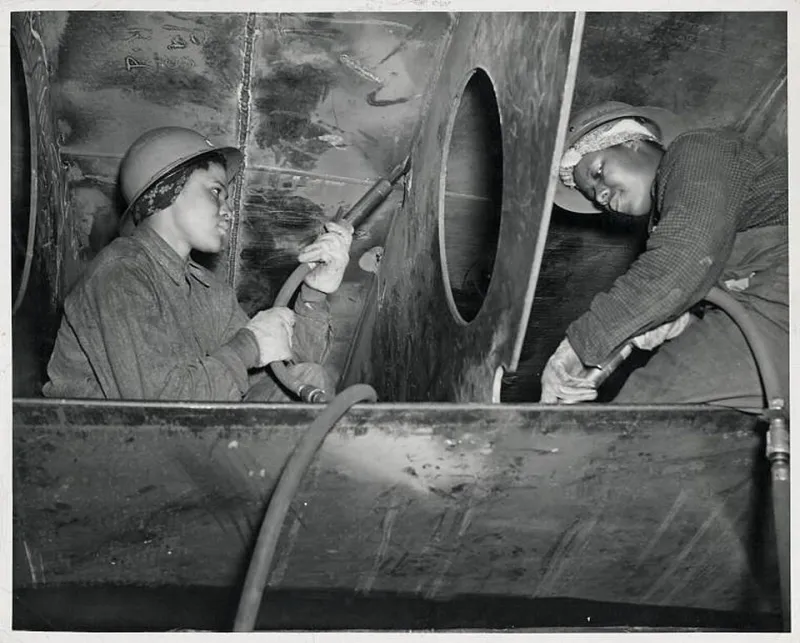
Photo: Lewis Hine, Public domain, via Wikimedia Commons
For about a decade, the career advice machine had one drumbeat: move fast, jump ship, never get comfortable. LinkedIn influencers preached that loyalty was for suckers, and that the only way to grow your paycheck was to walk out the door every two years with a competing offer in hand. A lot of Americans listened.
Some of them are starting to regret it.
Because while the job-hopping crowd was collecting signing bonuses and resetting their 401(k) vesting clocks, a quieter group of workers was doing something that looked almost old-fashioned — they were staying put. And now, those folks are sitting on pension balances, vested stock options, and profit-sharing payouts that their restless peers are only beginning to understand they missed out on.
This isn't your grandfather's "work 40 years and get a gold watch" story. This is something new — American companies, especially domestic manufacturers, regional banks, and homegrown retailers, are building loyalty programs that actually translate into generational wealth. And the workers who recognized the shift early? They're cashing in.
The Vesting Clock Nobody Warned You About
Here's the thing about job-hopping that the career gurus glossed over: most of the best benefits don't kick in until you've been somewhere long enough to earn them.
Stock option grants, profit-sharing plans, pension contributions, employer 401(k) matches — virtually all of these come with vesting schedules. Leave before you hit the threshold, and you walk away from real money. Sometimes a lot of it.
Take Marcus, a 44-year-old quality control supervisor at a mid-sized Ohio auto parts manufacturer. He's been with the same company for 16 years. Over that stretch, he's accumulated fully vested company stock worth roughly $180,000, a defined-contribution pension that his employer funds at 8% of his annual salary, and profit-sharing distributions that have averaged $6,000 a year for the last seven years. His total compensation package, once you factor all of that in, runs about 40% higher than his base salary suggests.
"I had buddies who left for other plants chasing $3 or $4 more an hour," Marcus told us. "A few of them are doing fine. But none of them have what I've got sitting in that retirement account right now."
The math isn't complicated. It's just easy to ignore when a recruiter is dangling a shiny new title in front of you.
American Companies Are Competing for Keepers, Not Just Starters
Part of what's changed is that domestic employers — particularly in manufacturing, logistics, healthcare, and skilled trades — have finally woken up to a hard truth: replacing a worker costs a fortune. Industry estimates routinely put turnover costs at 50% to 200% of an employee's annual salary, once you factor in recruiting, onboarding, and the productivity drag that comes with every new hire.
So companies started getting serious about retention. Not just with pizza parties and "culture" buzzwords, but with real financial incentives designed to reward the people who stick around.
Long-term incentive plans, once reserved for executives, are now filtering down to plant floor supervisors, skilled tradespeople, and mid-level managers at companies across the country. Regional employers — the kind that have been rooted in their communities for decades — are particularly aggressive about this, because they can't compete with coastal tech salaries and they know it. What they can offer is stability, community, and a benefits structure that compounds over time.
Susan, a 51-year-old logistics coordinator at a family-owned distribution company in rural Tennessee, has watched this play out firsthand. "This company gave me profit-sharing before I even knew what that meant," she said. "I've been here 22 years. My kids' college was paid for with those distributions. My house is paid off. I'm not a millionaire, but I'm comfortable in a way that most people my age aren't."
The Gig Economy's Fine Print
It's worth spending a minute on the other side of this ledger, because the gig economy and the freelance hustle culture made a lot of promises that didn't quite pan out the way the apps suggested.
When you're an independent contractor driving for a platform or picking up freelance projects between "real" jobs, you're not just missing out on employer benefits — you're taking on costs that most people underestimate. Self-employment taxes, your own health insurance premiums, no employer 401(k) match, no paid time off, no workers' comp if you get hurt. The income might look comparable on paper. The actual financial picture rarely is.
The gig economy served a real purpose for people who needed flexibility during a transition, or who had specialized skills they could monetize independently. But for the average American worker building a career and a financial future, it was never the wealth-building vehicle it was marketed as. The platforms got rich. Most of the workers got hustle fatigue.
Tenure Is Back in Style — Here's How to Make It Work
If you're thinking about planting your flag somewhere and committing for the long haul, there are a few things worth doing to make sure that loyalty actually pays off.
Read your benefits package like it's a contract — because it is. Vesting schedules, pension contribution rates, profit-sharing eligibility windows — these details matter enormously over a 10- or 15-year horizon. Ask HR to walk you through the numbers if you're not sure what you're looking at.
Pick a company with roots. A domestic employer that's been operating in the same community for 20 or 30 years is a fundamentally different bet than a startup chasing its next funding round. Stability compounds just like interest does.
Negotiate at the start, then grow inside. The best time to negotiate your base salary is before you sign. Once you're in, focus on performance, internal promotions, and expanding your role — the long-term benefits multiply faster when your base grows too.
Don't confuse loyalty with passivity. Staying with one company doesn't mean standing still. The workers who build real wealth through tenure are the ones who keep developing skills, take on more responsibility, and make themselves indispensable. That's what earns the raises, the promotions, and eventually the senior-level benefit packages.
The Quiet Revolution Happening in American Workplaces
There's something bigger going on beneath the surface of all this. As American companies bring more production home, invest in domestic supply chains, and compete harder for skilled workers, the employment relationship is quietly shifting back toward something that looks a lot more like a genuine partnership.
That's good news for workers who are willing to commit. The gig economy taught a generation to treat employment as purely transactional — a short-term exchange with no loyalty on either side. But the most stable, well-compensated workers in America right now are largely the ones who found a good domestic employer, showed up every day, and let time do its work.
It's not a flashy strategy. It won't go viral. But it builds real wealth, in real American communities, for real American families.
And right now, that's looking like the smartest career move of all.