Leaving the Bay Area Behind: How Tech Workers Are Reviving Small-Town America — and Loving Every Minute
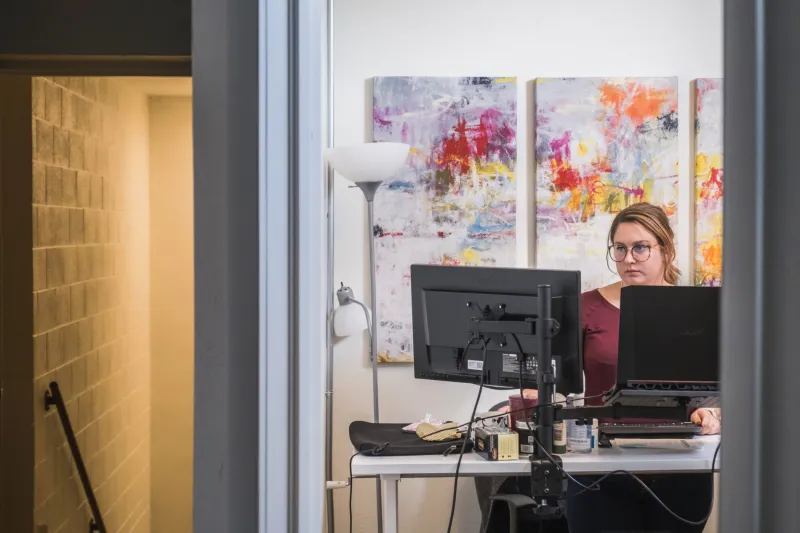
Photo: tech worker working remotely from small town home office rural America, via ruralinnovation.us
For years, the story went something like this: you grow up in a small town somewhere in the middle of the country, you're sharp with computers or code, and eventually you pack your bags for San Francisco, Austin, or Seattle. That's just how it worked. The talent flowed one direction — outward — and the communities left behind made do.
But something has shifted. Quietly, then all at once, that current is reversing. Tech professionals who spent years grinding it out in coastal metros are heading home — or heading somewhere that feels like home — and they're bringing their skills, their savings, and their startup ambitions with them. This isn't a niche lifestyle trend. It's a genuine economic movement, and it's one of the most American stories happening right now.
Why the Coasts Started Losing Their Grip
Let's be honest about what pushed people out. San Francisco's median rent crossed $3,000 a month for a one-bedroom apartment years ago and never looked back. Seattle and Boston aren't far behind. Add in state income taxes that can eat 13% of your paycheck in California, commutes that swallow two hours of your day, and a cost of living that makes saving for a house feel like a fantasy — and suddenly that six-figure tech salary doesn't stretch nearly as far as it sounds.
Remote work broke the seal. When companies proved during the pandemic that engineers, developers, product managers, and data analysts could do their jobs from literally anywhere with a decent internet connection, the geographic tether snapped. People started asking a simple question: Why am I paying $4,000 a month for a studio when I could own a three-bedroom house somewhere I actually want to raise a family?
The answer, increasingly, is: there's no good reason at all.
The Regions Leading the Charge
Certain parts of the country are seeing this migration more clearly than others, and the results are striking.
Appalachia and the Rural South have long been written off by coastal media as economically hopeless. But places like Pikeville, Kentucky, and Huntsville, Alabama, are quietly becoming magnets for remote tech workers. Huntsville in particular has built a legitimate tech and defense-contracting corridor that's attracting serious talent. Housing is affordable, the people are welcoming, and the quality of life — outdoor recreation, tight-knit communities, low crime in many areas — is genuinely appealing to people burned out on urban chaos.
The Great Plains and Mountain West tell a similar story. Bozeman, Montana, has seen such an influx of remote workers and tech entrepreneurs that locals joke about it becoming the next Boulder. Towns in Nebraska, the Dakotas, and Kansas are actively recruiting remote workers with incentive programs — some offering cash grants just to relocate. Tulsa Remote, Oklahoma's well-known program, has already brought hundreds of remote workers to the city, with measurable economic impact.
The Rust Belt Revival is also worth watching. Cities like Pittsburgh, Pennsylvania, and Columbus, Ohio, have made deliberate investments in tech infrastructure, university partnerships, and startup ecosystems. They're not small towns, but they represent the same principle: American cities that were overlooked for decades are now competitive destinations for skilled workers who don't need to be in New York or San Francisco to do their jobs.
Real People, Real Stories
Take someone like Marcus, a software engineer who spent eight years in the Bay Area working for a mid-sized SaaS company. He grew up in a small city in rural Tennessee, and when his company went fully remote in 2021, he made the call. He bought a four-bedroom house for less than what he'd been paying annually in rent. He started a small consulting practice on the side, primarily serving local businesses that had zero digital infrastructure. Two years later, he's got three employees — all locals — and he's helping neighboring small businesses build e-commerce operations they never thought were within reach.
That's the multiplier effect nobody talks about enough. When skilled tech workers relocate to underserved communities, they don't just bring a paycheck. They bring knowledge, networks, and often the entrepreneurial drive to build something new in a place that's been starving for it.
What This Means for Local Economies
The economic ripple effects are real and measurable. When a tech worker earning $120,000 remotely relocates to a town where the median household income is $45,000, they become a significant economic actor almost immediately. They shop locally, they renovate houses, they start or fund small businesses, and they pay taxes in a community that genuinely needs the revenue.
Beyond individual impact, clusters of tech talent tend to attract more tech talent. Startup ecosystems don't form overnight, but they do form — and they tend to form where smart, motivated people are concentrated. Several rural broadband expansion initiatives, backed by both federal investment and private providers, are making connectivity less of a barrier than it used to be. That infrastructure piece is critical, and it's improving.
Local colleges and community colleges are also stepping up. Institutions in states like Iowa, West Virginia, and Mississippi are building coding bootcamps, cybersecurity programs, and digital skills certifications designed to train local workers to fill the roles that incoming tech employers need. That's not dependency — that's community building.
The Patriotic Case for Coming Home
There's something deeply American about this trend that deserves to be said plainly. For too long, the assumption was that success meant leaving — that your hometown was something to escape, not invest in. That thinking hollowed out communities across this country for decades, draining them of their most ambitious people and concentrating opportunity in a handful of already-wealthy coastal zip codes.
The reversal we're seeing now is a correction, and it's a healthy one. When talented Americans choose to plant their roots in places that need them, they're not making a sacrifice. They're making a smart financial decision and contributing to something larger than themselves. That's a combination worth celebrating.
If you're a tech professional sitting in an overpriced apartment wondering whether the trade-offs are still worth it — or if you're a small-town American wondering whether a career in tech is even accessible to you — the answer to both questions is getting more optimistic by the day.
Your country needs your skills. And there's a good chance your hometown is ready for them.
Explore domestic tech career opportunities and remote-friendly employers at mycountrymyjob.com.