Built to Last: How America's Manufacturing Comeback Is Creating Careers Your Kids Can Step Into
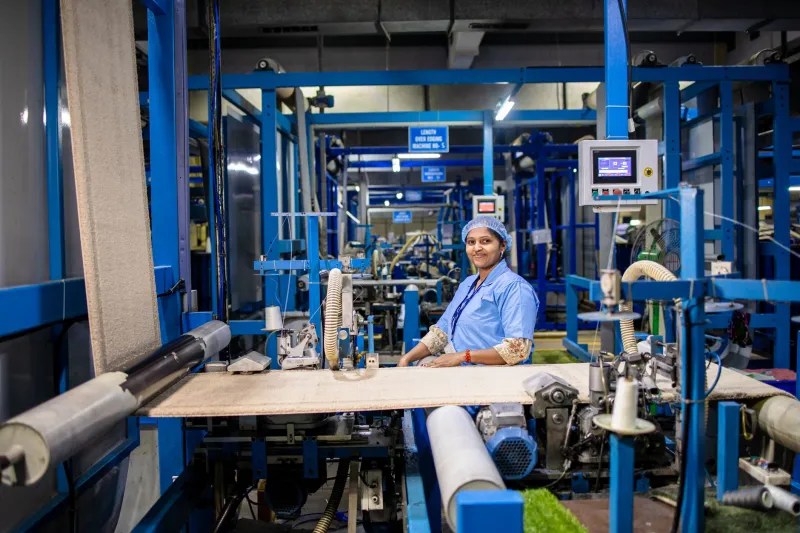
Walk through a modern semiconductor fabrication plant in Arizona, or a battery cell facility in Georgia, or an aerospace components shop in Ohio, and it doesn't look like the factory your grandfather worked in. The floor is cleaner, the equipment is more sophisticated, and the workers — many of them younger than you'd expect — are running processes that require real technical skill.
But something about it does feel familiar. There's a permanence to it. A sense that this facility is going to be here in 20 years, that the skills being developed on this floor have long-term value, and that a worker who invests in understanding this operation has a real future in front of them — not just a paycheck.
That feeling is not an accident. And it's one of the most important things happening in the American economy right now.
Why Reshoring Is Different This Time
American manufacturing has had false dawns before. Announcements get made, ribbon-cuttings happen, and then the economics shift and the work quietly drifts back overseas. Workers in manufacturing communities have been burned enough times to be skeptical, and that skepticism is earned.
But the current reshoring wave has structural drivers that previous cycles didn't. Supply chain failures during the pandemic exposed the real cost of overextended global logistics. Geopolitical tension with China has made domestic production a national security priority, not just an economic preference. Federal legislation — including the CHIPS Act and the Inflation Reduction Act's manufacturing provisions — has directed hundreds of billions of dollars into domestic production capacity. And rising labor costs in traditional offshore manufacturing hubs have eroded the cost advantage that drove offshoring in the first place.
The result is a wave of domestic investment that analysts increasingly describe as durable rather than cyclical. These aren't companies chasing a short-term subsidy. They're building infrastructure they intend to operate for decades.
Where the Jobs Are — and Where They're Going
The geographic spread of this investment is significant. While some coastal metros are capturing high-tech manufacturing activity, the biggest job growth is concentrated in regions that need it most.
The Southeast is seeing massive investment in electric vehicle production and battery manufacturing. Georgia alone has attracted over $20 billion in EV-related manufacturing investment in recent years. Tennessee, South Carolina, and Alabama are seeing similar activity in automotive and aerospace.
The Midwest remains the backbone of American industrial capacity, and it's being reinvigorated. Ohio, Indiana, Michigan, and Wisconsin are all benefiting from semiconductor supply chain investment, advanced metals fabrication, and defense manufacturing.
The Southwest — particularly Arizona and Texas — is becoming a center for semiconductor fabrication, with TSMC and Intel both building major facilities that will operate for generations.
Appalachia and the rural South are capturing investment in precision manufacturing, plastics, and industrial components — often in communities that have been waiting decades for this kind of economic anchor.
For workers in or near these regions, the opportunity is real and it's now.
The Career Ladder Is Back
Here's the piece of this story that doesn't get told enough: modern domestic manufacturing isn't just creating jobs. It's creating career structures.
The post-WWII American manufacturing economy was built on a model that gave workers a genuine path. You started on the floor, you learned the operation, you moved into a technical or supervisory role, and over 20 or 30 years you built a career with real earning power and genuine expertise. That model got hollowed out as manufacturing moved offshore. Now it's coming back.
A worker who enters a semiconductor fab as a process technician today can reasonably expect to advance into equipment maintenance, process engineering, quality assurance, and eventually operations leadership — all within the same facility. The same progression exists in EV battery plants, aerospace manufacturing, precision machining, and advanced materials production.
These aren't gig jobs. They're not contract positions. They're full-time, benefited roles at companies that have made decade-long capital commitments to specific locations. The incentive to develop and retain workers is baked into the model.
The Skills That Get You In — and Move You Up
The barrier to entry for advanced manufacturing is real but not insurmountable. Here's a practical map of what gets you in the door and what moves you up the ladder.
Entry-level access:
- Associate degrees or certificates in advanced manufacturing technology, industrial maintenance, or mechatronics from community colleges
- Apprenticeships through trade unions or direct employer programs — many major manufacturers are building their own pipelines
- Military technical training in electronics, mechanics, or logistics translates directly to manufacturing environments
- OSHA certifications, forklift operation, and basic quality control training signal readiness to employers
Mid-career advancement:
- CNC machining and programming skills are in chronic short supply and command significant pay premiums
- Automation and robotics maintenance is one of the fastest-growing skill sets in domestic manufacturing
- Quality management certifications (Six Sigma, ISO auditing) open doors to supervisory and technical specialist roles
- Process improvement skills — even at a basic level — are valued disproportionately in environments focused on efficiency
Long-term leadership:
- Operations management experience, especially in lean manufacturing environments, positions workers for plant leadership
- Supply chain knowledge is increasingly valued as companies manage complex domestic supplier networks
- Safety management is a consistent pathway to senior roles in heavy manufacturing environments
What This Means for American Families
Zoom out from the individual career path for a moment and look at what this reshoring wave means at the community level. Because that's where the full picture gets genuinely exciting.
When a major manufacturing facility establishes itself in a mid-sized American city, the effects compound over time. Suppliers and service companies cluster around it. The tax base grows, which funds schools and infrastructure. Local businesses that serve workers — restaurants, housing, retail — expand. And critically, the facility creates a multi-generational employment anchor.
This is exactly what happened in American manufacturing communities from the 1940s through the 1970s. Families built their lives around stable industrial employers. It's not nostalgia to want that back. It's a reasonable expectation of what a healthy economy can provide.
The workers who position themselves now — who get the training, who take the entry-level roles, who invest in the skills that move them up — are the ones who will be managing these facilities in 15 years. And in some cases, their kids will be walking in behind them.
Getting Positioned Right Now
If you're considering a move into manufacturing, the most important thing you can do is research what's being built in your region and work backward from there. Find out which facilities are under construction or recently opened within a reasonable commute. Identify the community colleges or technical programs that have formal partnerships with those employers. Apply for apprenticeships directly — many large manufacturers are actively recruiting and will pay for your training.
The window isn't closing, but the workers who move early will have the most options. Domestic manufacturing is being built right now, by American hands, for the long haul. That's not a press release. That's a career opportunity — and for the right workers, it's a generational one.